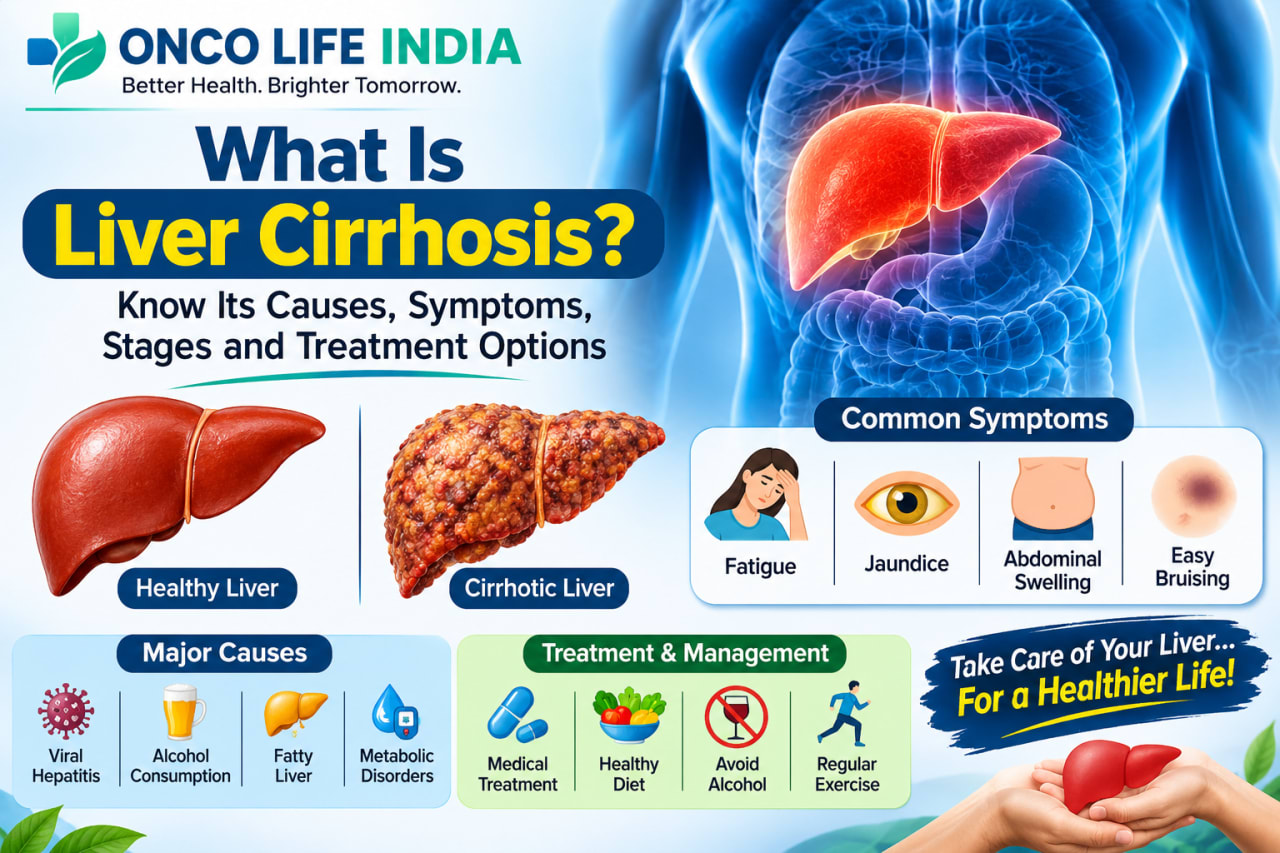
LIVING WITH LIVER CIRRHOSIS: TREATMENT AND LIFESTYLE CHANGES Liver cirrhosis is a late-stage chronic liver condition where healthy liver tissue is permanently replaced by scar tissue (fibrosis). When the liver suffer long-term damage or inflammation , it tries to heal itself by forming scar tissue. Over time, too much scar tissue blocks normal blood flow through the organ, stopping it from properly filtering toxins, processing nutrients, and making essential proteins. HOW CHRONIC LIVER DAMAGE LEADS TO SCARRING? Chronic liver damage leads to scarring through a continuous cycle of injury , inflammation and abnormal tissue repair. The progression of liver scarring: • ongoing injury: conditions like chronic viral hepatitis ,heavy alcohol use or metabolic dysfunction associated steatoic liver disease repeatedly damage liver cells over months or years. • Inflammation &cytokine release: Damaged liver cells and activated immune cells release signaling proteins called inflammatory cytokines. • Stellate cell activation: this persistent inflammatory signal awakens dormant, vitamin-A storing cells in the liver known as hepatic stellate cells . once activated ,they transform into mycofibroblast. • Excess collagen deposition: mycofibroblast act as ‘’scar factories’’ overproducing and secreting large amounts of extracellular matrix proteins ,primarily by fibrillar collagen. • Fibrosis to cirrhosis: in a healthy liver, small amounts of scar tissue form and clear during normal healing. In chronic damage, this scar tissue build up faster than it can be broken down ,forming a fibrous ‘’chicken wire’’ network . over time, this thickness ,chokes blood vessels and leads to severe ,widespread scaring known as cirrhosis . WHAT ARE THE CAUSES OF LIVER CIRRHOSIS? Cirrhosis is caused by long-term damage and scarring (fibrosis) of the liver tissue. When the liver is injured rapidly over many years, it tries to heal itself by forming scar tissue ,which blocks normal blood flow and prevents the organ from working properly. Leading causes of cirrhosis • Chronic Alcohol abuse: Heavy, long-term alcohol consumption is one of the most common cause of liver damage and scarring. • Viral hepatitis: long-standing infections with hepatitis B, hepatitis C or hepatitis D cause ongoing inflammation that can lead to cirrohosis over time. • Metabolic Dysfunction –associated steatotic Liver Disease (MASLD/NAFLD): fat buildup in the liver –often linked to obesity , type2 diabetes ,high cholesterol and poor diet-can cause MASH and leads to scarring. WHAT ARE THE SIGNS AND SYMPTOMS OF LIVER CIRRHOSIS? Liver cirrhosis often causes no symptoms in its early stage. As scarring advances, the liver struggles to function, leading to physical and neurological signs. Early stage and symptoms In the beginning phages, symptoms can be mild and easily overlooked : • Fatigue and weakness: Felling constantly tired or drained • Digestive changes : loss of appetite ,nausea, and unintentional weight loss . • Abdominal discomfort: mild pain or a dull ache in the upper right side of the belly • Skin and nail signs: itchy skin, spider-like tiny blood vessels on the skin or reddened palms • Easy bruising and bleeding: A tendency to bleed easily from the gums or get frequent nosebleeds. Advanced signs and symptoms As liver damage worsen, more severe complications develop: • Jaundice: A yellowing of the skin and the whites of the eyes, often accompanied by dark urine • Fluid buildup: swelling in the lower legs ,ankles or feet or severe swelling in the abdomen from fluid accumulation • Mental changes: confusion, memory loss ,difficulty thinking ,personality changes, or sleep distrubances due to a buildup of toxins the liver can no longer filter out. • Internal bleeding: vomiting blood or passing black,tarry stools caused by ruptured swollen veins in the esophagus or stomach. • Muscle and hormonal shifts: muscle wasting ,weakness or male breast enlargement WHAT ARE THE STAGES OF LIVER CIRRHOSIS? Liver cirrhosis is divided into two primary categories_ compensated cirrohosis and decompensated cirrhosis _ which are often broken down into four distinct numerical stages based on scarring and complications. The 4 clinical stages of cirrhosis • Stage 1(compensated, no varices ,no Ascites): the liver has significant scarring ,but it still performs its basic duties. There are typically no noticeable symptoms ,no fluid buildup in the abdomen and no enlarged veins . • Stage 2 (compensated with varices): portal hypertension develops causing swollen veins to form in the esophagus or stomach. The liver still compensates, and general symptoms remain mild or absent. • Stage 3 (Decompensated with Ascites): the liver can no longer keep up with bodily demands, entering the decompensated phase. This stage is marked by the onset of clear complications ,most notably fluid accumulation in the abdomen and marked swelling or jaundice . • Stage 4(Decompensated with variceal bleeding/end-stage) : the most severe and life-threathing stage, often defined by a ruptured esophageal or gastric varix leading to internal bleeding or vomiting blood. It heavily overlaps with end-stage liver disease(ESLD) and severe complications like hepatic encephalopathy and kidney failure. WHAT ARE THE RISK FACTORS FOR LIVER CIRROHSIS? Risk factors for liver cirrhosis are: 1. Heavy or prolonged alcohol consumption Heavy or prolonged alcohol consumption is a primary driver of alcohol-related liver disease, which can rapidly accelerate liver damage, cause acute-on-chronic liver failure , and drastically reduce survival rate in patients with established cirrhosis . studies shows that patients with alcoholic cirrhosis who continue heavy drinking have a dramatically lower survival rate compared to those who achieve complete abstinence . 2. Chronic viral hepatitis Chronic viral hepatitis causes long-term liver inflammation that can lead to irreversible scarring and liver cirrhosis over time. Older age at the time of infection and male sex are consistently link to a higher and faster rate of fibrosis progression. Long-standing, untreated chronic infection those inherited during early childhood have a much higher cumulative risk of leading to cirrhosis over decades. 3. Obesity and type 2 diabetes Obesity and type2 diabetes are major independent and interacting risk factors for liver cirrhosis ,primarily by driving metabolic dysfunction –associated steatotic liver disease (MASLD). Over time, ongoing inflammation and high blood sugar levels activate hepatic stellate cells, causing collagen deposition, scar tissue and eventually irreversible liver cirrhosis. 4. Metabolic disorders Metabolic disorders drive liver cirrhosis primarily by causing chronic fat accumulation, insulin resistance, and cellular inflammation in the liver . frequently clusters with metabolic syndrome and independently compounds the risk of major adverse liver outcomes. CONCLUSION A diagnosis of liver cirrhosis is a serious medical condition , but it is not an immediate end-of-life sentence. While the scar tissue that replaces healthy liver cells cannot be fully undone, proactive medical care, strict lifestyle adjustments and early management can stop further damage, control symptoms, and allow many people to live well for years. FREQENTLY ASKED QUESTION(FAQ): QUESTION: WHAT IS LIVER CIRRHOSIS? Liver cirrhosis is a late –stage, permanent condition where healthy liver tissue is replaced by scar tissue due to long-term liver damage and inflammation. As Scar tissue builds up, it blocks the normal flow of blood through the liver and stops the organ from working properly. QUESTION: WHAT ARE THE EARLY WARNING SIGNS OF LIVER CIRRHOSIS ? Early –stage cirrhosis frequently causes no noticeable symptoms because the liver keeps working despite internal scaring. When early signs do appear, they are often, mild and easy to overlook. Common early warning signs • Persistent fatigue and weakness: felling constantly tired or drained even with adequate rest . • Digestive changes: loss of appetite, a feeling of fullness after eating small amounts of mild morning nausea. • Unintended weight and muscle loss: losing weight without trying alongside gradual muscle wasting. • Skin and blood changes: frequent or easy brusing, prolonged bleeding from minor cuts or mild chronic skin itching from built-up bile salts. • Abdominal discomfort: A dull ache or mild pain in the upper right side of the belly • Hormonal or sleep shifts: disrupted sleep cycles or early hormonal signs like irregular periods in women or breast tissue enlargement QUESTION: CAN LIVER CIRROHSIS BE REVERSED? Established liver cirrhosis is not considered reversible, because the permanent scar tissue that replaces healthy liver tissue cannot be completely undone. REFRENCES: 1)https://www.mountelizabeth.com.sg/conditions-diseases/liver-cirrhosis/symptoms-causes?utm_source=google&utm_medium=cpc&utm_campaign=IN_MEH_EN_LiverTransplant_Exact_&_Phrase_RSA&gad_source=1&gad_campaignid=19507657891&gclid=CjwKCAiAhqHXBhAXEiwATbksU4HyF3S3KEb1DqxcYE0fvZP_S5qUZTYmlEYMcwsCXyLKms9JlS8MohoCxL8QAvD_BwE 2https://my.clevelandclinic.org/health/diseases/15572-cirrhosis-of-the-liver
LIVING WITH LIVER CIRRHOSIS: TREATMENT AND LIFESTYLE CHANGES
Onco Life India Editorial Team 7 min read
#Liver Cirrhosis#Liver Disease#Liver Health#Hepatitis B#Hepatitis C#Liver Fibrosis#Cirrhosis Treatment#Liver Care