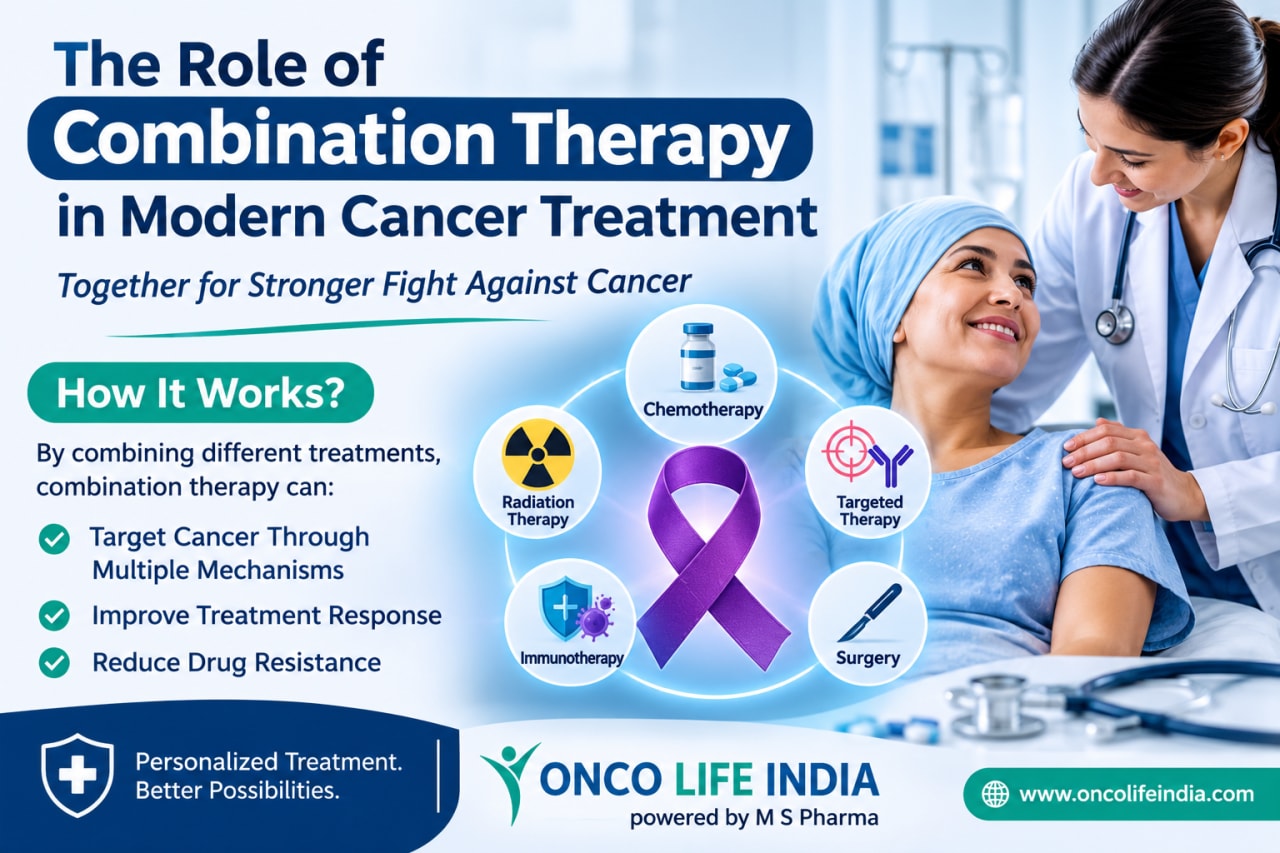
The Role of Combination Therapy in Modern Cancer Treatment
Combination therapy is an important approach in modern cancer treatment. It involves using two or more different treatments together or in a specific sequence to target cancer more effectively than a single treatment alone.
These treatments may include chemotherapy, targeted therapy, immunotherapy, radiation therapy and surgery. By attacking cancer through different mechanisms, combination therapy may improve treatment response, help control tumor growth and reduce the risk of drug resistance in selected patients.
For example, combining a BRAF inhibitor such as dabrafenib with a MEK inhibitor such as trametinib may be used to treat certain patients with advanced melanoma.
How Are Treatment Combinations Selected?
Doctors select cancer treatment combinations based on the cancer type, stage, molecular characteristics, patient's overall health and expected treatment response.
Important selection criteria include:
- Complementary Mechanisms: Different treatments should target cancer through separate biological pathways to improve effectiveness and help prevent resistance.
2. Pharmacokinetic Compatibility: Doctors consider how medicines are absorbed, distributed, metabolized and eliminated to reduce the risk of harmful drug interactions.
3. Non-Overlapping Toxicity: Treatment combinations should be selected carefully to avoid overlapping side effects and excessive toxicity.
What Are the Types of Combination Cancer Therapy?
Several types of combination therapy are used in modern oncology.
- Chemotherapy Combinations
Combination chemotherapy involves using two or more anticancer medicines to destroy cancer cells through different mechanisms.
Each medicine may target cancer cells at different stages of the cell cycle or affect different biological pathways. This approach may improve treatment effectiveness and reduce the likelihood that cancer cells will become resistant to a single medicine.
2. Chemotherapy with Radiation Therapy
Chemotherapy uses systemic medicines to treat cancer throughout the body, while radiation therapy uses high-energy radiation to destroy cancer cells in a specific area.
Doctors may combine these treatments in an approach called chemoradiation or chemoradiotherapy. In certain cancers, chemotherapy can make cancer cells more sensitive to radiation, potentially improving treatment effectiveness.
3. Chemotherapy with Surgery
Chemotherapy may be given before or after surgery depending on the cancer type, stage and treatment goals.
A. Neoadjuvant Chemotherapy (Before Surgery)
Goal: Shrink large tumors to make them easier to remove.
Benefits: May allow less extensive surgery or organ-preserving procedures in selected patients.
Treatment Response: Helps doctors assess how the cancer responds to chemotherapy.
Early Treatment: May help treat microscopic cancer cells that could have spread beyond the primary tumor.
B. Adjuvant Chemotherapy (After Surgery)
Goal: Destroy microscopic cancer cells that may remain after surgery.
Benefits: May lower the risk of cancer recurrence in selected patients.
Timing: Usually begins after an appropriate recovery period, depending on wound healing, blood counts and the patient's overall condition.
4. Targeted Therapy Combinations
Targeted combination therapy uses two or more medicines to block different cancer-related pathways.
Cancer cells may develop alternative pathways to survive when one pathway is blocked. Combining targeted medicines can help prevent these escape mechanisms and improve treatment response.
The specific combination depends on the molecular characteristics of the cancer and the medicines approved for that condition.
5. Immunotherapy Combinations
Combination immunotherapy uses two or more treatments to help the immune system recognize and attack cancer cells more effectively.
For example, doctors may combine different immune checkpoint inhibitors or use immunotherapy alongside chemotherapy in certain cancers.
Chemotherapy may also release tumor antigens by damaging cancer cells, potentially helping the immune system recognize the tumor. However, treatment combinations depend on the cancer type and individual patient factors.
How Does Combination Therapy Work?
Combination therapy works by using different treatments to attack cancer through multiple biological mechanisms.
Different Treatments Target Cancer Through Different Mechanisms
Each treatment may have a different role in controlling cancer. For example:
Chemotherapy destroys rapidly dividing cells.
Targeted therapy blocks specific proteins or pathways involved in cancer growth.
Immunotherapy helps the immune system recognize and attack cancer cells.
Radiation therapy damages cancer cells in a targeted area.
Surgery removes tumors when they can be safely operated on.
Combining appropriate treatments may improve cancer control while helping doctors select suitable doses and treatment schedules.
Potential Effects on Tumor Growth and Cancer Cells
Combination therapy can target multiple biological pathways simultaneously. This may help shrink tumors, slow cancer growth and reduce the chance of cancer cells developing resistance to a particular treatment.
However, treatment effectiveness varies according to the cancer type, stage, molecular profile and patient's overall health.
What Are the Potential Benefits of Combination Therapy?
Some potential benefits of combination therapy include:
- Targeting Cancer Through Multiple Mechanisms
Different treatments attack cancer cells through separate biological pathways. This may improve tumor control compared with using a single treatment in certain cancers.
2. Potentially Improving Treatment Response
Combining medicines or treatment methods may produce a stronger therapeutic effect. Some treatments work together, while others independently target different cancer-related processes.
3. Addressing Treatment Resistance
Cancer cells can sometimes adapt to treatment by developing alternative survival pathways. Using appropriate combinations may reduce the likelihood of resistance and help maintain treatment effectiveness.
4. Tailoring Treatment to Specific Cancer Types and Patient Factors
Combination therapy allows oncologists to select treatments based on cancer type, stage, molecular characteristics, previous treatment response and the patient's overall health.
This personalized approach may help doctors choose a more suitable treatment strategy for individual patients.
Conclusion
Combination therapy plays an important role in modern cancer treatment. By using two or more treatment methods together or in a specific sequence, doctors can target cancer through different biological pathways, improve treatment response and potentially reduce drug resistance.
However, combination therapy is not suitable for every cancer patient. It may also increase the risk of side effects, toxicity and drug interactions. Therefore, treatment decisions should always be made by qualified oncology specialists after carefully evaluating the patient's condition.
Frequently Asked Questions (FAQs)
Q1. What is combination therapy in cancer treatment?
Combination therapy in cancer treatment involves using two or more medicines or treatment methods, such as chemotherapy, immunotherapy, targeted therapy, radiation therapy or surgery, to manage cancer more effectively.
Q2. How does combination therapy work?
Combination therapy works by targeting different biological pathways or cancer cell survival mechanisms simultaneously. This may improve treatment response and reduce the risk of resistance in certain cancers.
Q3. Is combination therapy suitable for every cancer patient?
No. Combination therapy is not suitable for every cancer patient. Some cancers respond well to a single treatment, while others may require multiple treatment approaches. Doctors consider cancer type, stage, overall health and potential side effects before recommending a treatment plan.
Q4. Can combination therapy cause more side effects?
Yes. Using multiple treatments may increase the risk of side effects or overlapping toxicities. Regular monitoring by the oncology team is important.
Q5. Who decides which combination therapy is appropriate?
A qualified oncologist evaluates the cancer diagnosis, stage, molecular test results, previous treatments and the patient's overall health before selecting an appropriate treatment combination.
References
National Center for Biotechnology Information (NCBI) – Combination Cancer Therapy
Lymphoma Research Foundation – Combination Therapy
Medical Disclaimer: This article is for educational and informational purposes only. Cancer treatment decisions must be made by a qualified oncology specialist. Never start, stop or combine cancer medicines without medical supervision.