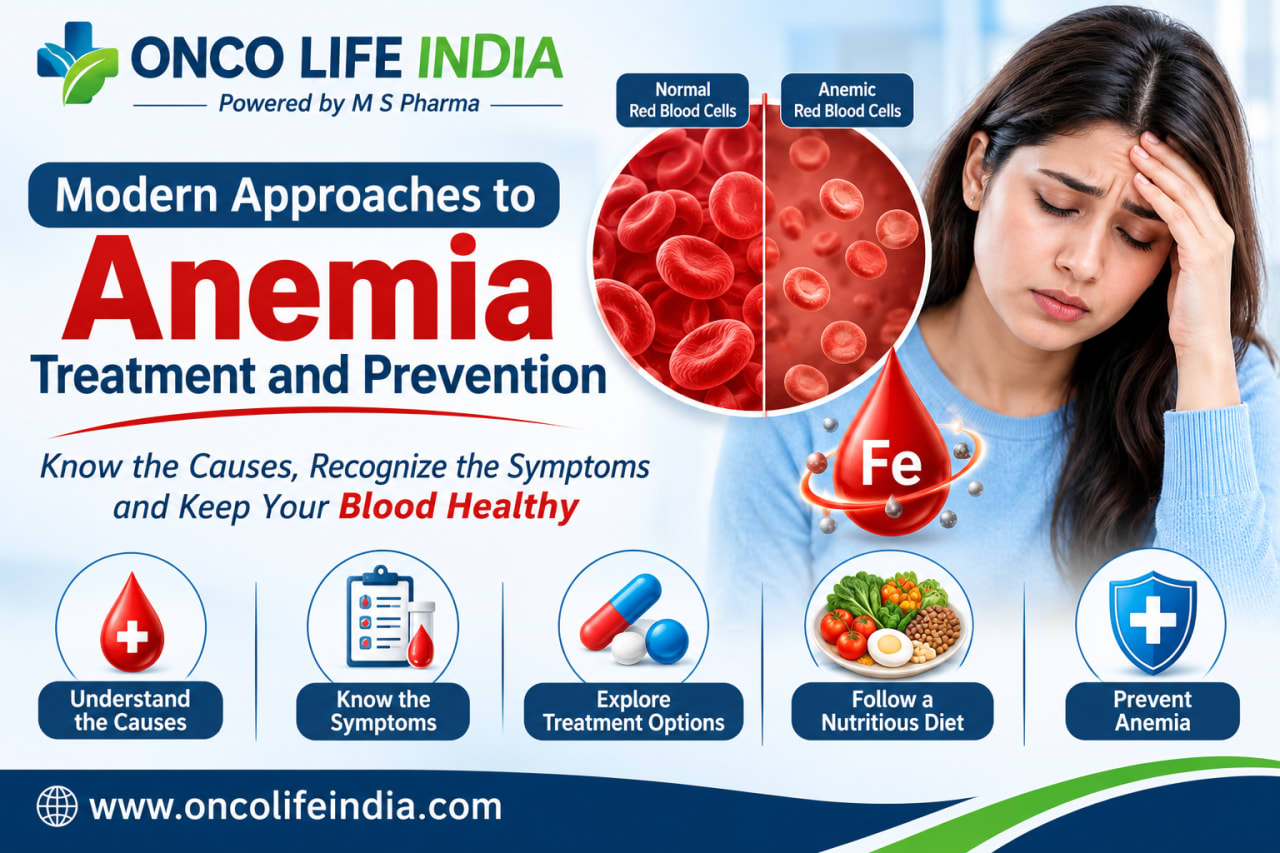
MODERN APPROACHES TO ANEMIA TREATMENT AND PREVENTION Anemia is a condition that occurs when the blood has fewer healthy red blood cells or lower hemoglobin levels than normal, which reduces its ability to carry oxygen to one’s body tissue and organs. WHAT ARE THE ROLES OF RED BLOOD CELLS AND HEMOGLOBIN ? Red blood cells (RBCs) carry oxygen from the lungs to the body’s tissue and help remove carbon dioxide, a process powered by iron-rich protein hemoglobin contained inside them. 1. Functions of red blood cells (erythrocytes ) • Oxygen transport: Deliver oxygen from the lungs to organs and tissues • Carbon dioxide removal: carry waste carbon dioxide back to the lungs so one can exhale it. • Blood flow and viscocity: maintain proper blood thickness and squeeze through tiny capillaries . • PH regulation: Help buffer and balance acid-base levels in the bloodstream. 2. Functions of Hemoglobin • Oxygen Binding: use iron-containing heme groups to grab oxygen in the lungs and release it where energy is needed. • Color and capacity: Give blood its red color and allow a single hemoglobin molecule to carry up to four oxygen molecules. • Gas and ion transport: Assist in carrying carbon dioxide back and buffering hydrogen ions to stabilize blood ph. HOW ANEMIA AFFECTS OXYGEN DELIVERY THROUGOUT THE BODY? Anemia reduces the total oxygen –carrying capacity of the blood because there are fewer red blood cells or lower levels of hemoglobin –the protein that binds and transports oxygen from the lungs to the body’s tissue. How oxygen delivery drops? • Lower arterial oxygen content (Cao2): while the amount of oxygen dissolved directly in the blood plasma and the percentage of hemoglobin saturation (SaO2) often stay normal, the actual concentration of hemoglobin is low. Because over 98% of oxygen travels bound to hemoglobin ,a drop in heamoglobin directly cuts the total amount of oxygen delivered per liter of blood. • Reduced Tissue oxygen saturation (stO2): with fewer oxygen molecules arriving at the capillary bells, local tissue oxygenation decreases ,forcing cells to extract a higher percentage of the remaining available oxygen just to function. How the body compensates? To keep vital organs alive and functioning when oxygen content drops, the body triggers several immediate and long-term adjustments . • Increased cardiac output : the heart pumps faster and harder to circulate the thinner, lower-capacity blood more quickly through the body. • Blood flow Redistribution: The body shunts blood preferentially to high-demand, oxygen-sensitive organs like the brain and the myocardium (heart muscle). • Increased breathing rates: sensing mild tissue hypoxia, the respiratory rate and depth increase to maximize oxygen uptake in the lungs. WHAT ARE THE MAIN CAUSES OF ANEMIA? Anemia happens when one have too few red blood cells or low hemoglobin , which reduces the blood’s ability to carry oxygen. Most common causes • Iron deficiency anemia : this is the most frequent cause. It happens when the body lacks enough iron to make hemoglobin ,often due to blood loss ,pregnancy or a low-iron diet. In India, iron deficiency is particularly widespread among women and children. • Vitamin Deficiency anemia : The body needs vitamin B12 and folic acid to produce healthy red blood cells. A lack of these nutrients or the conditions like perniciouhttps://my.clevelandclinic.org/health/diseases/22377-pernicious-anemia anemia ,where the body cannot absorb vitamin B12 leads to macrocytic or megaloblastic anemia. • Anemia of chronic Disease : long-term health conditions –such as chronic kidney disease, cancer, rheumatoid arthritishttps://oncomshealthcare.com/mabura-40-mg-for-rheumatoid-arthritis-and-other-conditions/ ,HIV/AIDS, or inflammatory bowel diseases-cause ongoing inflammation that blocks the body from using stored iron properly • Blood loss: Acute or chronic bleeding from surgery, trauma ,injuries ,heavy periods or internal bleeding in the digestive tract depletes red blood cells faster than the bone marrow can replace them. • Hemolytic Anemia: this occurs when red blood cells break down or destroyed faster than the bone marrow can rebuild them. It can be inherited or acquired through autoimmune disorders or infections. • Bone marrow disorders: conditions that damage the bone marrow-such as aplastic anemia ,leukemia or melydodysplastic syndromes-prevent the body from manufacturing enough new blood cells. WHAT ARE THE TYPES OF ANEMIA AND THEIR TREATMENT? Types of anemia and their treatment are: 1) Iron deficiency anemia : iron deficiency anemia is a common blood condition that happens when the body lacks enough iron to make hemoglobin ,the protein in red blood cells that carries oxygen to the tissues. Main causes • Blood loss: heavy menstural bleeding ,gastrointestinal bleeding or regular use of pain relievers . • Dietary deficiency: not eating enough iron-rich foods like meat, eggs ,beans ,lentils and leafy greens. • Poor absorption: conditions that affect the small intestine such as chron’s disease, • Increased demand: pregnancy, infancy and childhood growth spurts. Treatment options • Oral iron supplements : taken daily or every other day to rebuild iron over several months • Intravenous (IV) iron: used if one cannot tolerate oral pills, have severe malabsorption or have inflammatory bowel diseases. • Addressing the root cause: Treating heavy periods, ulcers or other sources of internal bleeding. • Dietary changes : incorporating more iron-containing foods and avoiding drinking tea, or coffee right with meals which can block iron absorption. 2) Vitamin B12 deficiency anemia : vitamin b12 deficiency anemia is a type of megaloblastic anemia that happens when the body does not have enough healthy red blood cells because of low level of vitamin B12 . vitamin B12 is needed to make red blood cells ,which carry oxygen to the tissues and organs, when one lack B12, the bone marrow produces oversized, abnormal red blood cells that cannot function or carry oxygen properly. Main causes Vitamin B12 deficiency anemia generally happens for two main reasons: • Lack of intrinsic factor : An autoimmune condition where the immune system attacks the stomach cells that produce intrinsic factor-a protein the body needs to absorb B12 from the intestines. • Malabsorption or Dietary shotages: 1) Digestive or stomach conditions Gastritis ,crohn’s disease or celiac disease 2) Surgeries: having gastrointestinal surgery or gastric bypass that removes parts of the stomach or small intestine 3) Medications: long-term use of certain drugs like metformin or proton pump inhibtors. Treatment Treatment depends on the underlying cause and how severly depleted the B12 levels are: • Vitamin B12injections: often given intramuscularly for people who cannot properly absorb B12 though their gut, such as those with perimicicious anemia. • High-dose oral supplements : Daily high-dose vitamin b12 pills or sublingual tablets are effective for many people,including those with dietary deficiencies or mild absorption • Dietary changes: incorporating B12-rich foods or fortified foods, or working with a nutritionist. 3) Folate deficiency anemia : Is a type of megaloblastic anemia that happens when the body lacks enough vitamin B9 to produce healthy, normal –sized red blood cells. Because these cells become abnormally large and die early or fail to carry oxygen effectively, the tissues and organs do not receive enough oxygen. Primary causes • Poor dietary intake: not eating enough folate-rich foods like dark green vegetables, citrus foods ,beans, liver or fortified greens • Malabsorption condition: Digestive disorder that block nutrient absorption, such as celiac disease • Increased physiological demand: pregnancy, lactation or rapid growth periods require much higher amounts of folate • Medications: certain drugs _such as anti -seizure medications ,methoterxtrate, interfere with folate metabolism or absorption. Treatment • Supplementation: oral folic acid supplements are used to rapidly replate body stores, usually taken a few months. • Dietary changes: increasing daily intake of natural folate sources and fortified foods. • Pregnancy recommendation : healthcare providers recommend that people who can become pregnant take 400 to 800 mcg of folic acid daily before and during early pregnancy to help prevent severe neutral tube defects in the infant. CONCLUSION The modern approach to anemia treatment and prevention shifts the paradigm from a reactive, one-size-fits –all strategy to a proactive, highly targeted and multi-faced model. Rather than simply managing low haemoglobin levels ,contemporary medicine integrates advanced diagnostics ,localized public health interventions and innovative therapies to address the specific cellular and envoirmental root causes of the disease. FREQUENTLY ASKED QUESTIONS (FAQs): QUESTION:WHAT IS THE MOST EFFECTIVE TREATMENT FOR ANEMIA ? The most effective treatment for anemia depends on its underlying cause, as different types of anemia require completely different medical approaches. QUESTION: HOW LONG DOES ANEMIA TREATMENT TAKE? Improvement usually begin within a few weeks of starting supplements or injections, though severe nerve-related or cognitive symptoms can take several months to year to fully resolve. QUESTION: WHEN ARE IRON SUPPLEMENTS NECESSARY? Iron supplements are necessary when one have a diagnosed iron deficiency , iron deficiency anemia or specific high-risk health conditions where diet alone cannot maintain normal iron levels. QUESTION: CAN ANEMIA BE Completely CURED? Whether anemia can be cured permanently depends entirely on its underlying cause. REFRENCES: 1)https://my.clevelandclinic.org/health/diseases/3929-anemia 2)https://www.mayoclinic.org/diseases-conditions/anemia/diagnosis-treatment/drc-20351366
MODERN APPROACHES TO ANEMIA TREATMENT AND PREVENTION
Onco Life India Editorial Team 7 min read
#Anemia#Anemia Treatment#Iron Deficiency Anemia#Vitamin B12 Deficiency#Folate Deficiency#Hemoglobin#Iron Supplements#Blood Health#Anemia Prevention#General Health
More health articles
- Anti-CancerThe Role of Combination Therapy in Modern Cancer Treatment
- Anti-CancerCancer Treatment Explained: Types, Benefits, and How Cancer Medicines Work
- OsteoporosisOSTEOPOROSIS : HOW GENETICS AND LIFESTYLE AFFECT BONE STRENGTH
- Liver DiseaseLIVING WITH LIVER CIRRHOSIS: TREATMENT AND LIFESTYLE CHANGES